Dr. Ghandour will lead discussions on:
Relevant Functional Anatomy, Biomechanics and Research:
Evaluation and Differential Diagnosis:
Dynamic Soft Tissue Mobilization (DSTM):
Joint Mobilization Techniques:
Progressive Functional Rehabilitation Exercises:
Cueing Techniques for Muscle Recruitment:
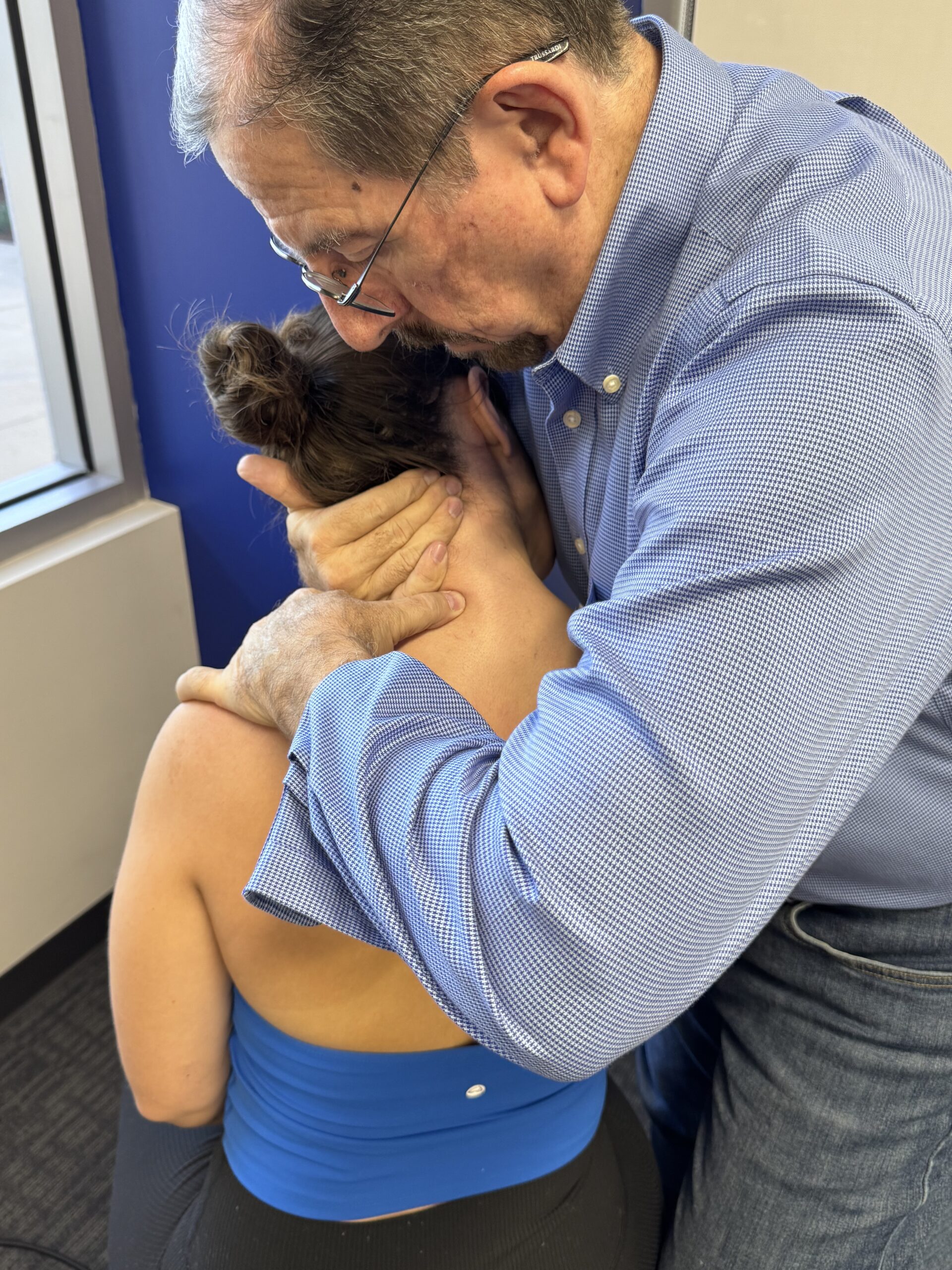
Clinical Application of Manual & Tactile Techniques:
The instructor will discuss Adjacent Segment Disease (ASD) from surgical and Physical Therapy perspective:
The participants will be able to take the knowledge learned in this two-day course and apply it immediately to their patients and clients.
Upon completion of this course, participants will be able to:
1. Differentiate myofascial, arthrogenic, and neuromuscular contributors to cervicothoracic dysfunction using advanced clinical reasoning models.
2. Demonstrate proficiency in dynamic soft tissue mobilization and graded joint mobilization techniques for the cervical and thoracic spine.
3. Apply evidence-based assessment strategies to identify postural and movement impairments related to cervicogenic headache, thoracic outlet syndrome, and forward head posture.
4. Integrate corrective exercise strategies with manual therapy to enhance mobility, stability, and motor control.
5. Develop a treatment progression model that integrates soft-tissue, joint, and functional exercise components to achieve sustainable patient outcomes.
6. Identify and explain the neurology and motor control mechanisms relevant to the cervical spine, including the deep stabilizing muscles and their role in spinal stability.
7. Describe the biomechanics of the cervical spine, focusing on its functional range of motion, stability, and the interrelationship between the cervical, thoracic and scapular complex.
8. Discuss the concept of manual therapy lesions in the cervical spine and identify how these lesions affect movement patterns and spinal stability.
9. Perform a thorough Cervical spine evaluation including segmental mobility testing to assess spinal dysfunction and identify mobility restrictions or instabilities.
10. Implement Dynamic Soft Tissue Mobilization (STM) techniques for key cervical spine, targeting myofascial restrictions and improving tissue flexibility to enhance spinal mobility and stability.
11. Perform isolated muscle testing for key cervical stabilizers, such as the deep rotators and multifidus, to assess their recruitment and function in maintaining spinal stability.
12. Design and implement progressive functional exercises to activate deep stabilizing muscles of the cervical spine and restore proper movement patterns and thoracic endurance
a. Manual therapy techniques (mobilizations, STM)
b. Pulleys, body weight exercises, and free weights to enhance stability and motor control.
13. Discuss the progression of spinal stabilization exercises, including key concepts for progressing Range of motion, coordination, endurance and stability exercises from basic to functional levels.
14. Explain the progression of concentric and eccentric exercises,detailing how each phase contributes to strengthening the lumbar spine and improving movement control.
15. By the end of the course, participants will have the ability to integrate these techniques and concepts into their clinical practice, improving outcomes for patients with cervical spine instability and thoracic dysfunction.